Dozens of Maya Deity Head Sculptures Discovered in Guatemalan Jungle
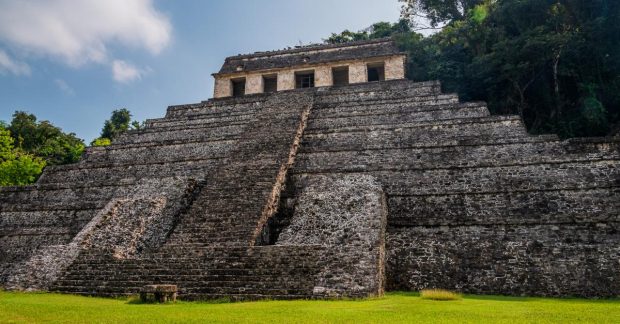
Archaeologists using advanced scanning technology have uncovered about 40 sculptures and fragments of deity heads in the ancient city of El Mirador.
 👥Society
Photo: UNIAN
Key points
- About 40 Maya deity sculptures and fragments were discovered.
- Artifacts date back to the Late Classic period (600–900 AD).
- Surveys were conducted utilizing advanced LiDAR technology.
Modern technology continues to unveil hidden chapters of ancient civilizations, helping researchers discover unique artifacts in some of the most remote corners of the planet. During recent excavations in the dense jungles of Guatemala, scientists stumbled upon a significant number of historical artifacts that shed light on the lives and beliefs of the Maya civilization.
New Discoveries in El Mirador
In the ancient city of El Mirador, located in the northern part of the country, researchers found approximately 40 intact sculptures and fragmented deity heads. The items are made of stucco and plaster, with preliminary analysis dating them to the Late Classic period of the Maya civilization, between 600 and 900 AD. According to researchers, many of the findings currently require restoration, though several pieces have already been studied in laboratory conditions.
Cutting-Edge Technology Uncovering the Past
The objects hidden beneath a thick layer of vegetation were detected using LiDAR technology. This laser-based scanning method allows researchers to penetrate dense tree canopies and reconstruct terrain topography along with hidden architectural structures. In addition to the sculptures, experts mapped the remains of residential areas and ancient roadways, confirming the scale and high level of organization of the former urban center.
«Exploring the territory allows us to test hypotheses regarding how much of the region this ancient city could actually control», — researchers note.
The collected data helps to better understand the architectural and social framework of El Mirador, where up to 200,000 people may have lived during its peak. Further fieldwork and analysis of these discoveries will reveal new insights into the development and decline of one of America's most enigmatic pre-Columbian civilizations.
Source UNIAN — unian.ua/science/dzhungli-prihovuvali-davnyu-tayemnicyu-arheologi-z… ↗
Read next
 🧠AI Analysis
New Geography of Maritime Threats: Explosions and Fires Hit Russian Vessels from Libya to the Baltic
Incidents in the port of Benghazi and the Gulf of Finland highlight systemic vulnerabilities in Russia's international military logistics.
 🛡️Security
Zelenskyy announces updated Russian strike plans following intelligence report
President Volodymyr Zelenskyy reported receiving intelligence on updated enemy strike plans and held a meeting on mitigating the aftermath of attacks on the energy sector…
 💼Economy
Black Friday in Ukraine: Experts Advise Planning Tech Purchases in Advance
The late-autumn sales season encourages consumers to upgrade household appliances and electronics. Experts recommend approaching promotional offers with a well-planned li…
 🇺🇦Ukraine
Donald Trump's Stance on Supporting Ukraine: Estonia Explains Recent Talks
Estonian Prime Minister Kristen Michal stated that US leader Donald Trump did not call on Europe to suspend aid to Ukraine, suggesting a translation error may have occurr…
 💡Tech
End of shortage: analysts forecast price drops for SSDs and RAM by 2027
Global markets are heading toward a correction in component prices by mid-2027 as consumer demand for memory peaks and stabilizes.
 🚨Events
Storm Warning for Cherkasy Region: Uman Braces for Strong Winds and Icy Roads
Forecasters have issued a 'yellow' alert for most of Ukraine, including the Cherkasy region. On November 24, wind gusts up to 20 m/s and a transition to meteorological wi…